Frank Lloyd Wright remains one of the most influential architects of the 20th century, not only in the United States but around the world. His work includes internationally recognized landmarks such as the Guggenheim Museum, yet much of his legacy was built through residential architecture. Across his career, Wright designed more than 1,000 structures, including private homes for wealthy clients as well as practical houses intended for ordinary American families.
His approach to architecture was so original and lasting that several of his buildings are now recognized as part of a UNESCO World Heritage Site, while others are listed on the National Register of Historic Places. Culturally, the value of Frank Lloyd Wright houses is almost impossible to measure. Still, some of these homes have known market estimates or sale prices, offering a fascinating look at how architectural history is valued today.
Here are five iconic Frank Lloyd Wright houses and what they are believed to be worth.
5. Jacobs House
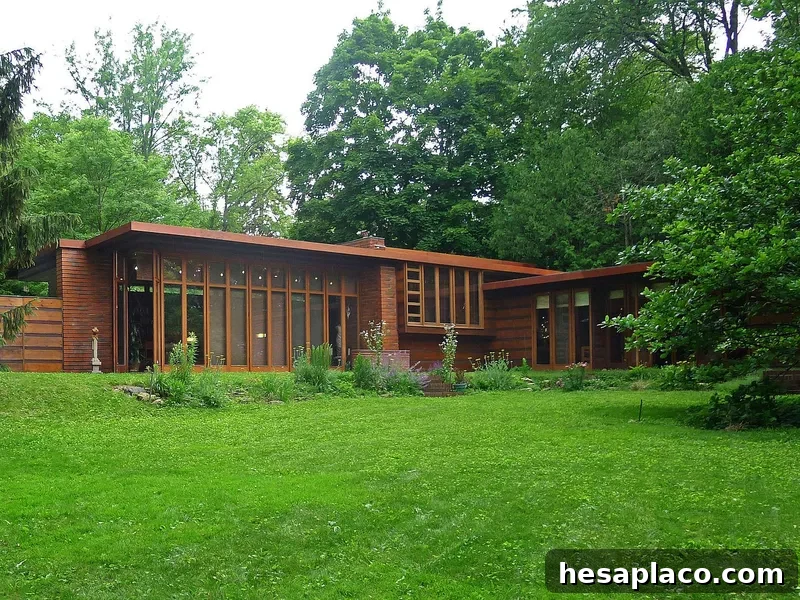
James Steakley / Wikimedia Commons
Location: Madison, Wisconsin
Worth: $486,300, according to Zillow’s estimate
Year: 1937
Size: 1,500 square feet
Tours available: No
The Genius of This Frank Lloyd Wright House
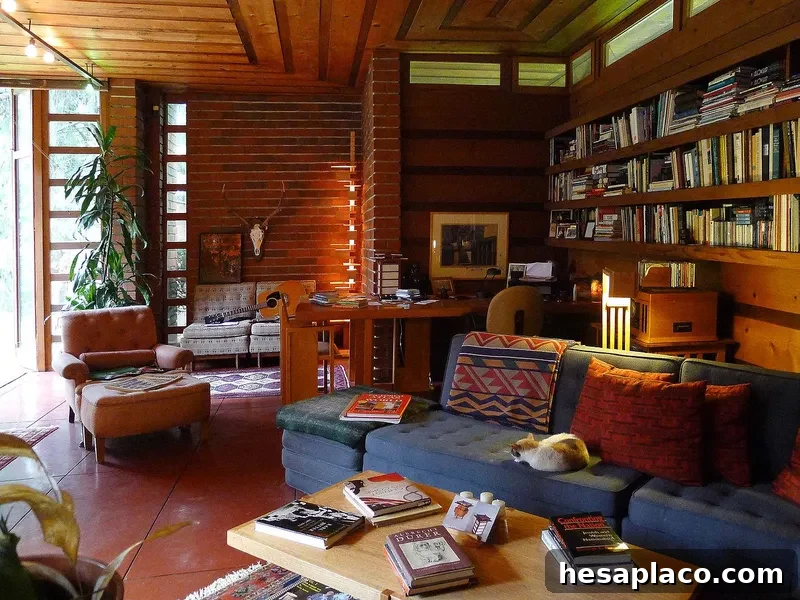
James Steakley / Wikimedia Commons
Frank Lloyd Wright developed a vision for American domestic architecture that he called Usonian. The idea focused on creating attractive, comfortable, and efficient homes that middle-class families could afford. The Jacobs House is widely considered the first major expression of that vision.
The project began with a challenge. Herbert Jacobs, a journalist and professor, asked Wright to design a well-made home for only $5,000, which would be roughly $95,000 today. Wright accepted and created a house that helped launch one of the most important movements in American residential design.
The Jacobs House reflects Wright’s belief that buildings should work in harmony with their surroundings. It uses natural materials such as wood, clay brick, and stone, while large windows bring daylight deep into the living spaces. Although the house is not currently for sale, its estimated value of $486,300 keeps it relatively close to the middle-class ideals that inspired its creation. Among Frank Lloyd Wright houses, it remains one of the clearest examples of beauty, function, and affordability coming together.
4. Frank Lloyd Wright Home and Studio
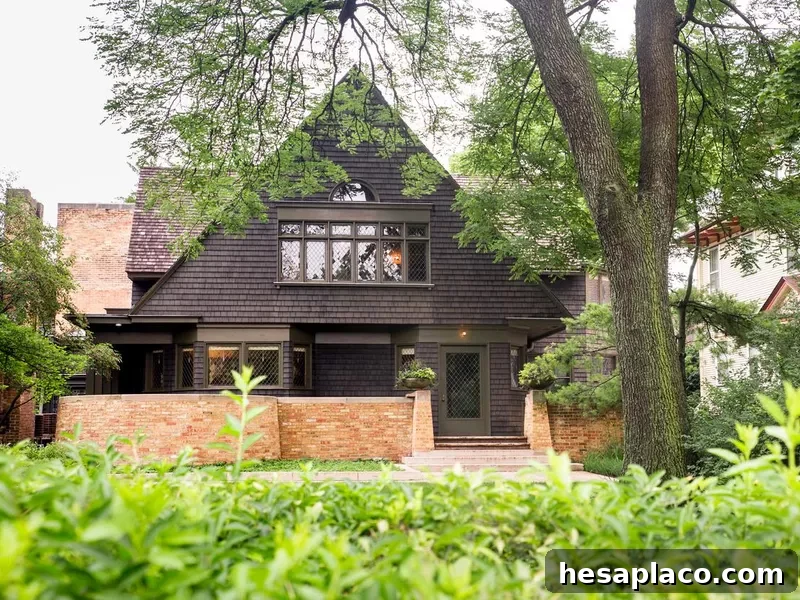
littleny / Getty Images
Location: Oak Park, Illinois
Worth: Unknown
Year: 1889
Size: 17,424 square feet
Tours available: Daily
The Genius of This Frank Lloyd Wright House
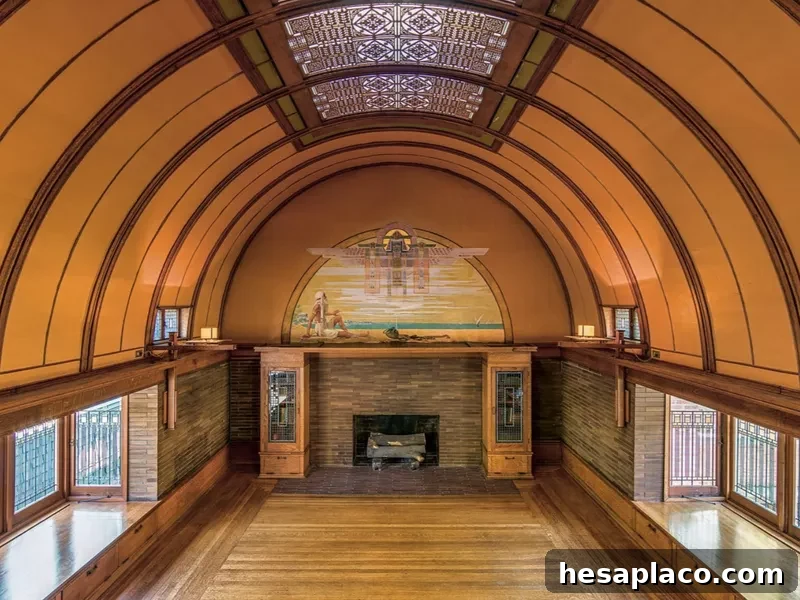
Management / Tripadvisor
The Frank Lloyd Wright Home and Studio was not only the first house Wright owned, but also the first home he designed for himself. For anyone interested in the origins of Frank Lloyd Wright architecture, this property is an essential stop.
While it may not appear as dramatic as some of his later masterpieces, the house reveals the early development of ideas that would later define his career. The kitchen, for example, used a more open plan at a time when such layouts were unusual. Wright continued to adjust the home over the years, using it as a place to test concepts and refine his approach to space, light, and family living.
Wright lived there until 1910 and eventually added a studio next to the house. Although his later residences, including Taliesin in Wisconsin and Taliesin West in Arizona, often receive more attention, the Oak Park property shows where his creative journey began. Its current value is unknown because it now functions as a museum rather than a private residence. Given its historical importance, it would likely command a very high price if it ever entered the market.
Visitors to Oak Park can also see several other Frank Lloyd Wright houses in the surrounding neighborhood, making the area one of the best places to experience his early residential work.
3. David and Gladys Wright House
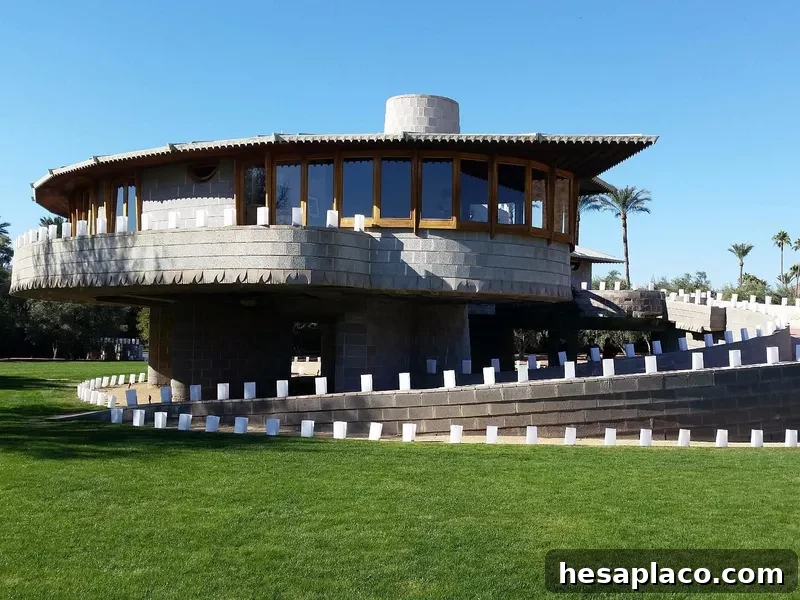
Management / Tripadvisor
Location: Phoenix, Arizona
Worth: $7.5 million
Year: 1950
Size: 2,500 square feet
Tours available: No
The Genius of This Frank Lloyd Wright House
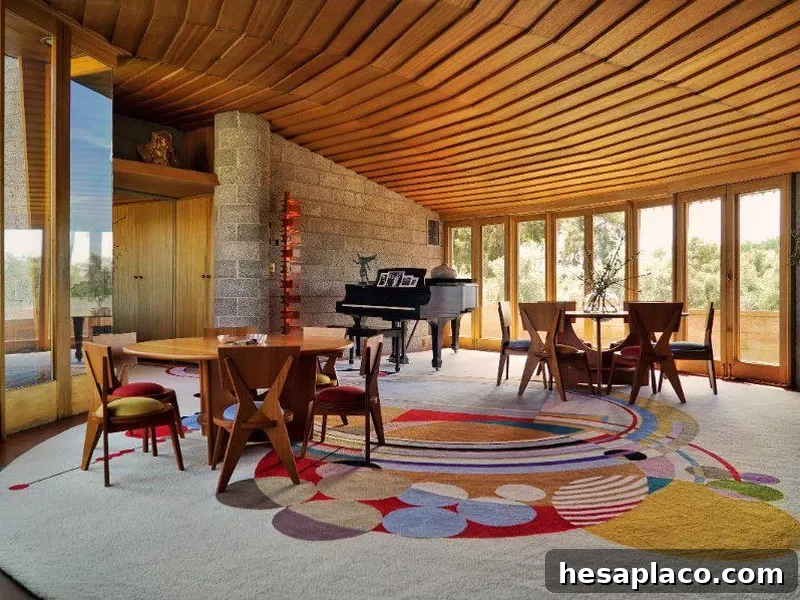
Frank Lloyd Wright Foundation / Facebook
The David and Gladys Wright House is one of Wright’s most distinctive residential designs. He created it for his son and daughter-in-law, and the personal nature of the commission is reflected in the care and detail of the finished home. The property includes a separate guest house and views toward the surrounding landscape.
Unlike many traditional homes, this design avoids rigid straight lines. Its circular living room creates a sense of movement and gathering, while a curved ramp connects the levels instead of relying on a standard staircase. The result is a house that feels fluid, sculptural, and unusually intimate.
David and Gladys Wright lived in the home until their deaths in the late 2000s. In 2012, the house was purchased by a developer who planned to demolish it, putting one of Wright’s important works at risk. Fortunately, preservation efforts succeeded, and the house remained standing.
The property sold for $7.5 million in 2020. The new owner reportedly planned to restore and maintain the house, ensuring that this significant example of Frank Lloyd Wright residential architecture continues to survive for future generations.
2. Robie House
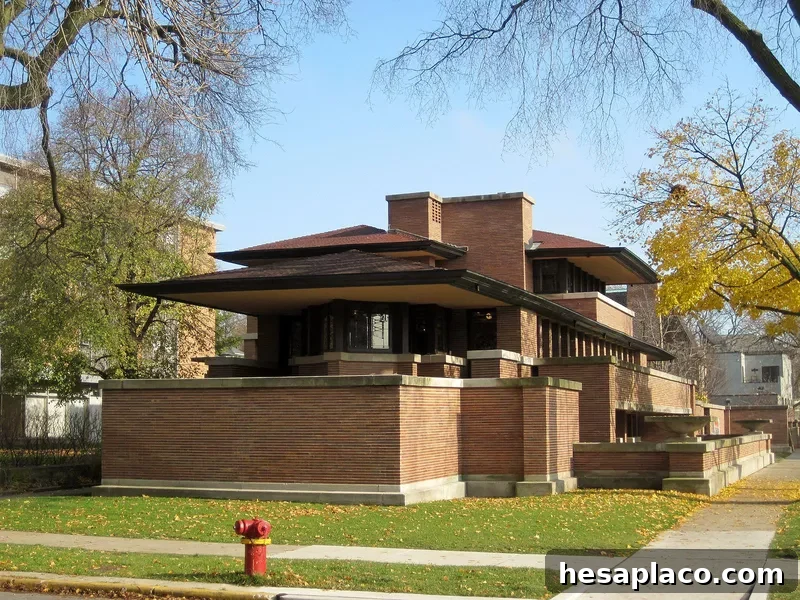
Teemu08 / Wikimedia Commons
Location: Chicago, Illinois
Worth: Unknown
Year: 1909
Size: 13,070 square feet
Tours available: Thursday to Monday
The Genius of This Frank Lloyd Wright House
Sailko / Wikimedia Commons
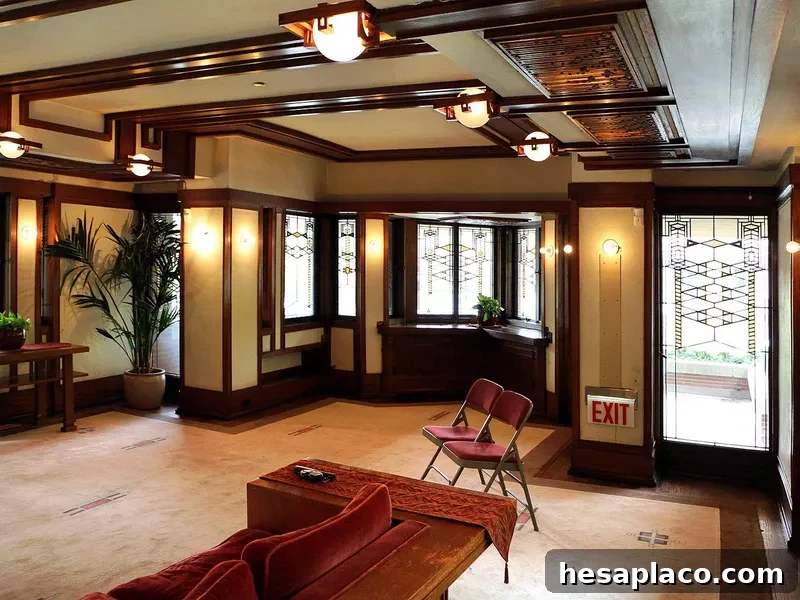
Wright helped define the Prairie style in the early 20th century, and few buildings represent that movement as clearly as the Robie House. Located in Chicago, it is often considered one of his most important masterpieces.
The house features strong horizontal lines, sharp geometric forms, broad overhangs, and an open interior plan that brings in generous natural light. These design choices were meant to echo the flat, expansive character of the American prairie. Inside, the freestanding fireplace anchors the space, while the layout encourages a more fluid way of living.
One of the most forward-looking elements of the Robie House is its use of glass doors that connect the interior directly to the patio. Today, indoor-outdoor living is common in residential design, but at the time, this was a bold and innovative idea.
The Robie House was threatened with demolition more than once. Wright himself stepped in to help save it, reportedly the only time he personally intervened to protect one of his own buildings. That fact alone speaks to the house’s importance in his body of work.
The exact value of the Robie House is unknown. However, its cultural and architectural value is extraordinary, and visitors to Chicago can tour the property to experience one of the most famous Frank Lloyd Wright houses in person.
1. Fallingwater
Carol M. Highsmith / Wikimedia Commons
Location: Mill Run, Pennsylvania
Worth: $10 million
Year: 1939
Size: 9,300 square feet
Tours available: Thursday to Tuesday
The Genius of This Frank Lloyd Wright House
Fallingwater / Facebook
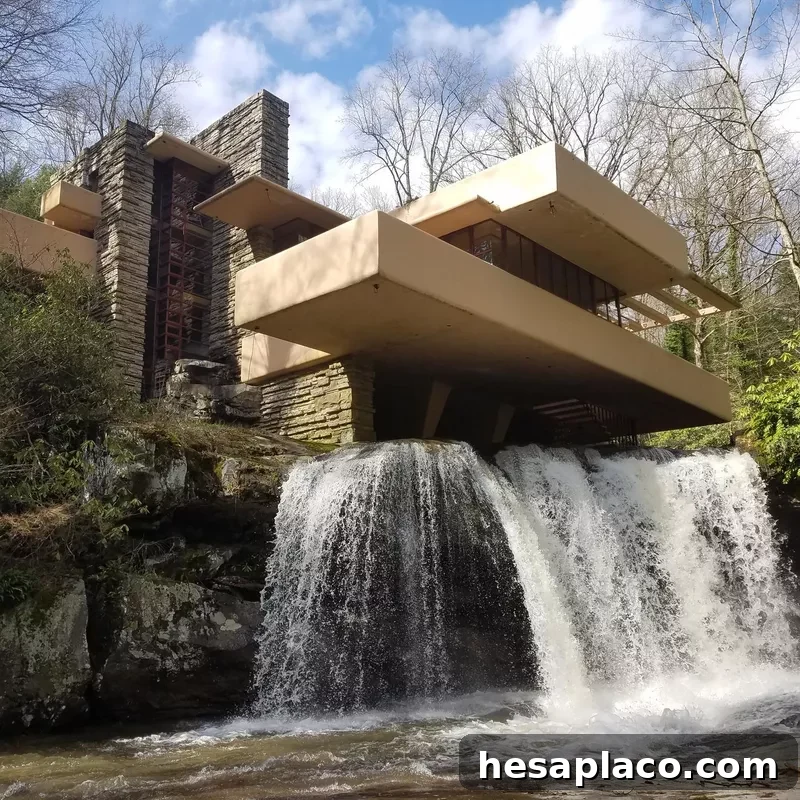
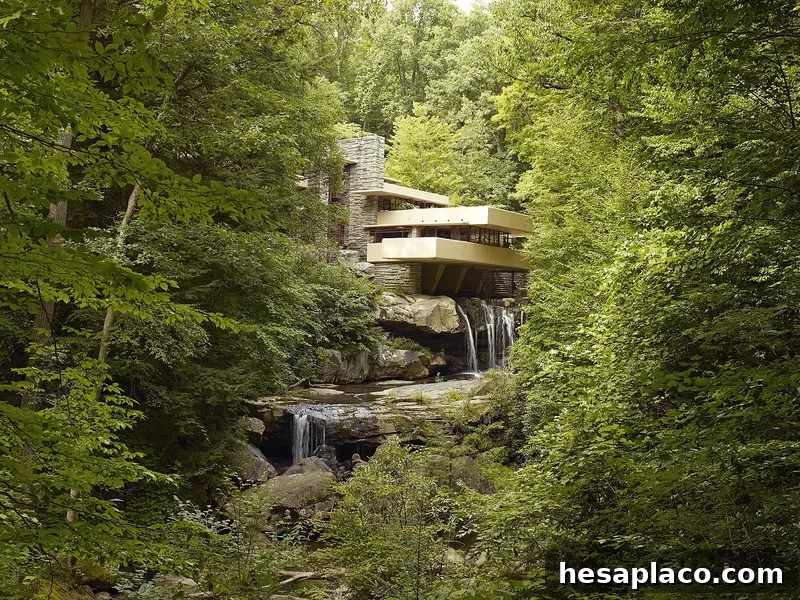
Fallingwater is widely regarded as Frank Lloyd Wright’s greatest residential masterpiece. Built above a waterfall in the Pennsylvania woods, it is one of the most recognizable and admired houses in the world.
Instead of placing the house beside the landscape as a separate object, Wright designed it to become part of the natural setting. The terraces extend over the water, and the materials help the structure blend into the forest around it. The design expresses one of Wright’s central beliefs: architecture should not dominate nature, but belong to it.
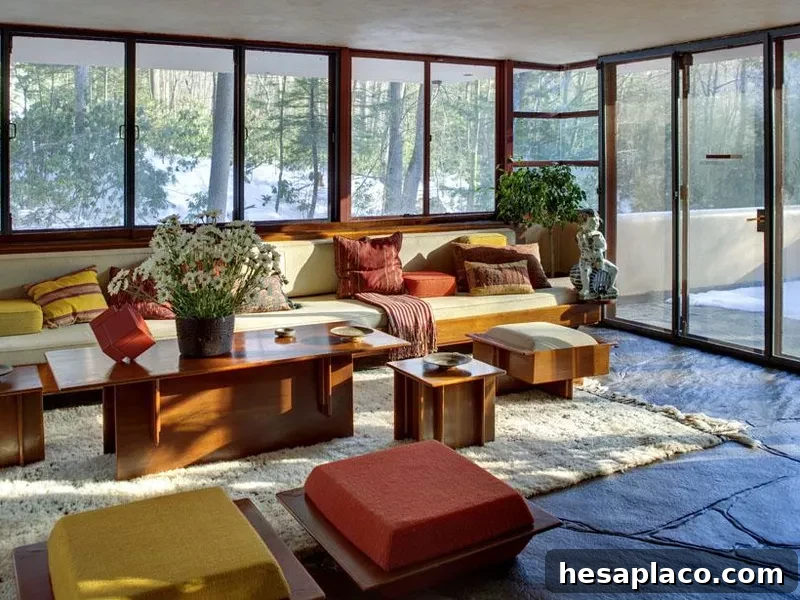
The waterfall is the home’s most famous feature, yet the interior is equally memorable. Large windows frame views of the surrounding trees, while stone and wood create a strong connection to the site. Every part of the house reinforces the feeling that the building and landscape are inseparable.
Fallingwater was so celebrated that it appeared on the cover of Time magazine in 1938, even before construction was completed. Although it is no longer a private residence, its estimated value is around $10 million. As both a work of art and a landmark of American architecture, its true worth goes far beyond that figure.
Honorable Mention: Lake Tahoe Lodge
Courtesy of Angi
Intended location: Lake Tahoe, California
Year: 1923
Tour available: Angi virtual concept
The Genius of This Frank Lloyd Wright House
Courtesy of Angi
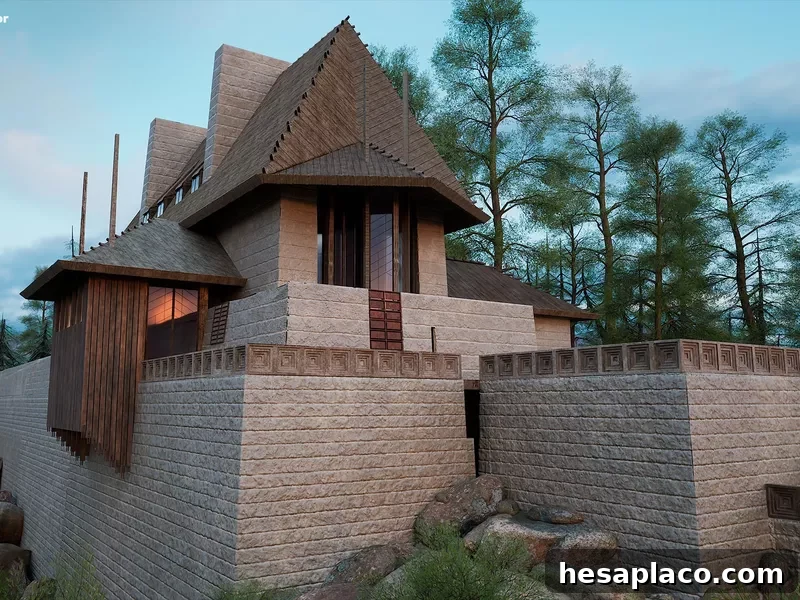
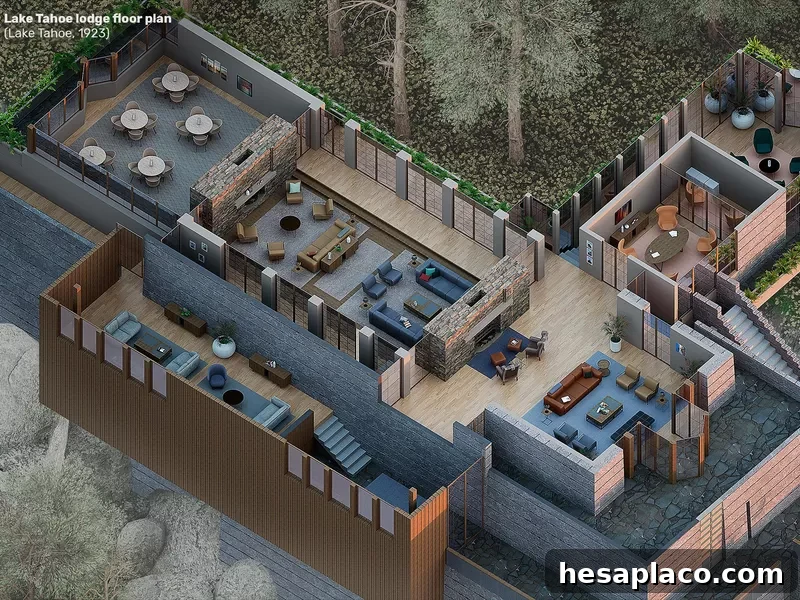
Many Frank Lloyd Wright houses deserve recognition, but the Lake Tahoe Lodge is especially intriguing because it was never built. A large number of Wright’s designs remained on paper, yet this project stands out because it was not simply a client commission. It represented one of his own dreams.
Wright later suggested that some of the best houses exist only on paper, and the Lake Tahoe Lodge was one of the designs that reflected that idea. In his vision, the lodge would have immersed travelers in the natural beauty of Lake Tahoe, combining shelter, scenery, and architectural imagination.
Because the house was never constructed, its market value cannot be estimated. Even so, its importance lies in what it reveals about Wright’s creative ambitions. Like his built masterpieces, the Lake Tahoe Lodge shows his desire to create architecture that deepens the relationship between people and the natural world.
Frank Lloyd Wright’s most famous homes continue to inspire architects, designers, homeowners, and travelers. Whether modest or monumental, built or unbuilt, these houses show why his residential work remains central to the history of modern architecture.