
Key takeaways
- With a federal minimum wage of $7.25, the United States did not rank in the top 10 in 2021.
- Seven of the 10 countries with the highest minimum wages in 2021 were in Europe.
Most developed nations adjust minimum wages regularly to respond to rising living costs, though some do so more frequently or aggressively than others. Countries with the highest minimum wages in 2021 tended to pair strong wage floors with comprehensive social supports, helping ensure workers across skill levels can meet basic needs.
Minimum wage laws, in their modern form, are a relatively recent development in labor policy. New Zealand led the way, introducing the first national minimum wage in 1894. The United Kingdom followed in the early 20th century, while the United States established a federal minimum wage in 1938. As of 2021, the United States did not rank among the top 10 countries by hourly minimum wage.
The list below ranks the top 10 countries by hourly minimum wage in 2021, converted to U.S. dollars for comparison. Regional variations, age-based rates, and special categories such as apprenticeships are common, so some countries report effective hourly wages derived from monthly or weekly statutory pay.
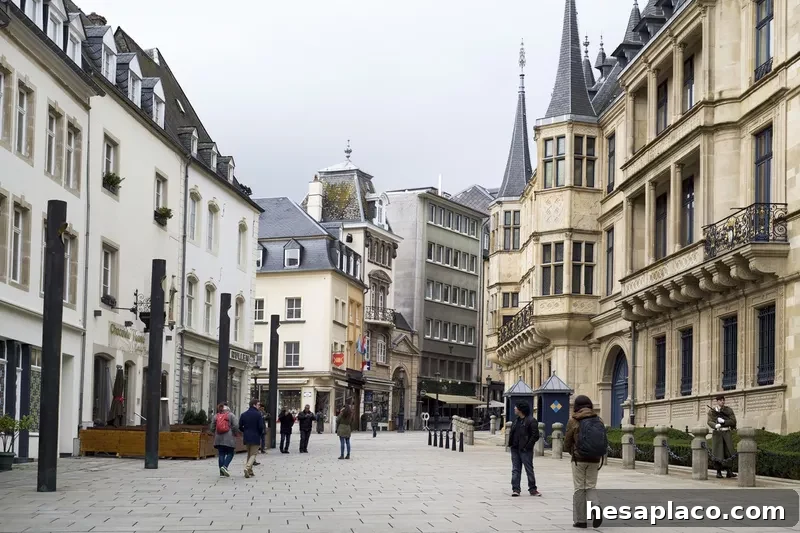
1. Luxembourg: $18.33/Hour
nito100 / Getty Images
GDP: $62.3 billion
GDP growth: 2.3 percent
Population: 625,978
GDP per capita: $105,280
Share of world GDP: 0.08 percent
Unemployment rate: 6.1 percent
Bottom Line: Luxembourg

RudyBalasko / Getty Images
Luxembourg had the highest statutory minimum wage in 2021, with skilled workers aged 18 and over earning 15.27 euros per hour (about $18.33). The country differentiates between skilled and unskilled workers. Skilled status can be based on formal education, recognized manual skills plus experience, or a long record of relevant experience; unskilled workers earned 12.94 euros per hour (around $15.53). Over the prior decade Luxembourg steadily raised its minimums, reflecting deliberate policy to support living standards.
2. Australia: $15.30/Hour

zetter / Getty Images
GDP: $1.3 trillion
GDP growth: 1.96 percent
Population: 25.5 million
GDP per capita: $53,831
Share of world GDP: 1.64 percent
Unemployment rate: 5.9 percent
Bottom Line: Australia

kokkai / Getty Images
Australia’s national minimum wage in 2021 was set at 19.84 AUD per hour (roughly $15.30 USD when annualized across a standard workweek). The system includes lower rates for apprentices and reduced percentages for younger workers under 21—these junior rates increase with age. The Fair Work Commission periodically reviews and adjusts the national minimum wage and implemented increases for 2021 with phased measures to ease transitions for employers and workers.
3. New Zealand: $14.40/Hour

wilpunt / Getty Images
GDP: $204 billion
GDP growth: 3.03 percent
Population: 4.8 million
GDP per capita: $43,415
Share of world GDP: 0.25 percent
Unemployment rate: 4.9 percent
Bottom Line: New Zealand

aimintang / Getty Images
In 2021 New Zealand set its adult minimum wage at 20 NZD per hour (approximately $14.40 USD). The country treats employees aged 16 and over as adults for minimum wage purposes, but newly hired 16- and 17-year-olds can be paid a lower “starting-out” or training rate for the first six months. New Zealand’s adjustments in 2021 were part of broader economic measures that included tax changes aimed at redistributing income.
4. Germany: $12.55/Hour

Meinzahn / Getty Images
GDP: $3.7 trillion
GDP growth: 2.22 percent
Population: 83.8 million
GDP per capita: $44,680
Share of world GDP: 4.56 percent
Unemployment rate: 6.2 percent
Bottom Line: Germany
Mlenny / Getty Images
Germany raised its national minimum wage in late 2020, moving toward 10.45 euros per hour (about $12.55) through staged increases. The phased approach aimed to balance worker protections with economic adjustment during the pandemic. The policy underscored the government’s position that minimum wages should keep pace with living costs, even in challenging times.
5. United Kingdom: $12.33/Hour

acmanley / Getty Images
GDP: $2.6 trillion
GDP growth: 1.79 percent
Population: 67.9 million
GDP per capita: $39,532
Share of world GDP: 3.26 percent
Unemployment rate: 4.9 percent
Bottom Line: United Kingdom

MarioGuti / Getty Images
The UK’s minimum wage system is age-tiered. In 2021 the full National Living Wage applied to workers aged 23 and over at 8.91 pounds per hour (around $12.33). Younger age groups received lower rates: 18–20-year-olds, 21–22-year-olds, under-18s, and apprentices each had distinct statutory rates set below the adult level.
6. France: $12.31/Hour

Claudiovidri / Getty Images
GDP: $2.6 trillion
GDP growth: 1.79 percent
Population: 65.3 million
GDP per capita: $39,827
Share of world GDP: 3.19 percent
Unemployment rate: 7.9 percent
Bottom Line: France

frantic00 / Getty Images
France’s statutory minimum wage in 2021 was 10.25 euros per hour, equivalent to a monthly floor of 1,554.58 euros (around $12.31 per hour). Most workers, including part-time employees, are covered by this rate, but apprentices and very young workers may be eligible for lower, age-based apprentice pay.
7. Ireland: $12.26/Hour

Dawid Kalisinski Photography / Getty Images
GDP: $331.4 billion
GDP growth: 7.80 percent
Population: 4.9 million
GDP per capita: $69,727
Share of world GDP: 0.41 percent
Unemployment rate: 7.2 percent
Bottom Line: Ireland

Mlenny / Getty Images
In 2021 Ireland raised its national minimum wage slightly to 10.20 euros per hour (about $12.26). Ireland has made several notable increases in prior years, and research around those changes found that most employers with minimum-wage staff did not experience large increases in overall labor costs.
8. Belgium: $12.20/Hour (Estimated)

ArtMarie / Getty Images
GDP: $494.7 billion
GDP growth: 1.73 percent
Population: 11.6 million
GDP per capita: $43,325
Share of world GDP: 0.61 percent
Unemployment rate: 5.6 percent
Bottom Line: Belgium

JurgaR / Getty Images
Belgium sets a statutory monthly minimum wage (1,625.72 euros in 2021) rather than a specific hourly rate. Converting the monthly floor into an hourly estimate across a typical four-week, 40-hour month yields roughly $12.20 per hour. Officially, calculations vary by contract terms and hours worked, but the monthly approach reflects how some European systems structure minimum compensation.
9. Netherlands: $11.68/Hour
tunart / Getty Images
GDP: $830.6 billion
GDP growth: 3.16 percent
Population: 17.1 million
GDP per capita: $48,796
Share of world GDP: 1.03 percent
Unemployment rate: 3.6 percent
Bottom Line: Netherlands

wjarek / Getty Images
The Netherlands provides statutory minimums expressed per month, week, and day. For adults over 21 in 2021, the monthly minimum translated to about 1,684.80 euros, or around 9.72 euros per hour when calculated over a 40-hour workweek—approximately $11.68 per hour. This structure accommodates varied working patterns while ensuring a baseline income level.
10. Canada: $9.16–$12.80/Hour

Aolin Chen / Getty Images
GDP: $1.6 trillion
GDP growth: 3.05 percent
Population: 37.7 million
GDP per capita: $44,841
Share of world GDP: 2.04 percent
Unemployment rate: 7.5 percent
Bottom Line: Canada

surangaw / Getty Images
Canada sets minimum wages at the provincial and territorial level, so rates varied across the country in 2021. Provincial minimums ranged from about 11.45 CAD in Saskatchewan (roughly $9.16 USD) to 16 CAD in Nunavut (about $12.80 USD), with several provinces in the $11–$15 CAD range. Because of this subnational variation, Canada’s effective minimum wage can differ significantly depending on location, but overall the nation has consistently appeared among the world’s top-tier minimum wage rates.