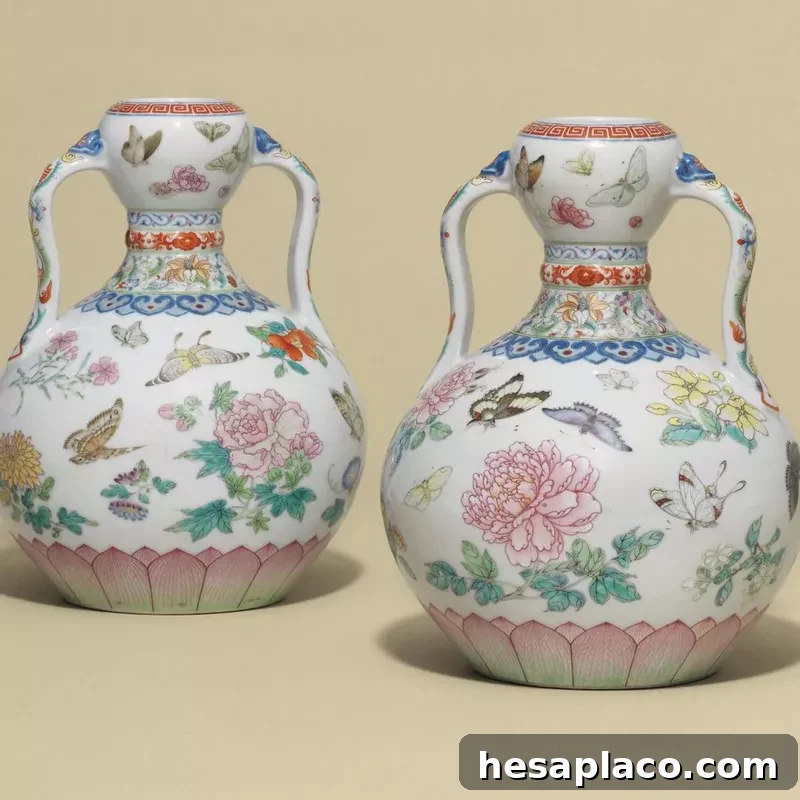
The most expensive privately owned vases in the world come overwhelmingly from China. These exceptional works are usually imperial porcelains, created in royal kilns for the courts of Chinese emperors. Many of the finest examples date from the 18th-century Qing Dynasty, when emperors such as Yongzheng and Qianlong actively collected antique ceramics and commissioned court potters to revive historic shapes, glazes and decorative styles.
Because many of the greatest Chinese ceramics are already held by museums, especially in China and Taiwan, rare imperial vases attract intense competition whenever they appear at auction. Private collectors, wealthy buyers and art dealers often compete for these pieces, and prices for important Chinese porcelain have risen dramatically in recent decades.
Below are the most expensive vases in the world, ranked by auction price in current U.S. dollars.
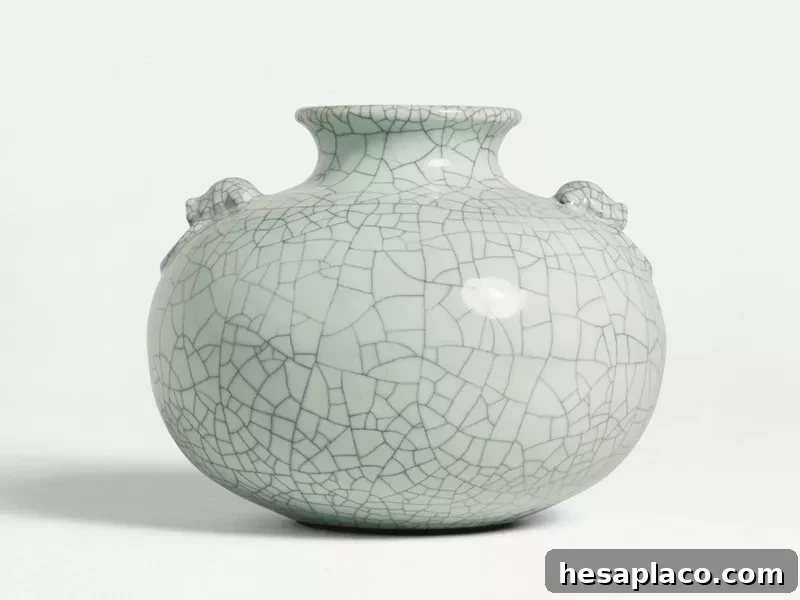
29. Chinese Qing Ge Ware Celadon Vase
Sotheby’s
Sale year: 2011
Sale price: $921,577
Price today: $1.16 million
This 18th-century Qing Dynasty vase is covered in a pale greenish-gray crackled glaze and was made to imitate Ge Ware ceramics from the 12th-century Song Dynasty. Qing emperors admired earlier Chinese ceramics, especially Song pieces, and ordered refined court copies for imperial use. The vase has a rounded, squat body, a short narrow neck and mock ring handles with animal-mask details. Sotheby’s Hong Kong sold the same vase in 1981, 1986 and again in 2011.
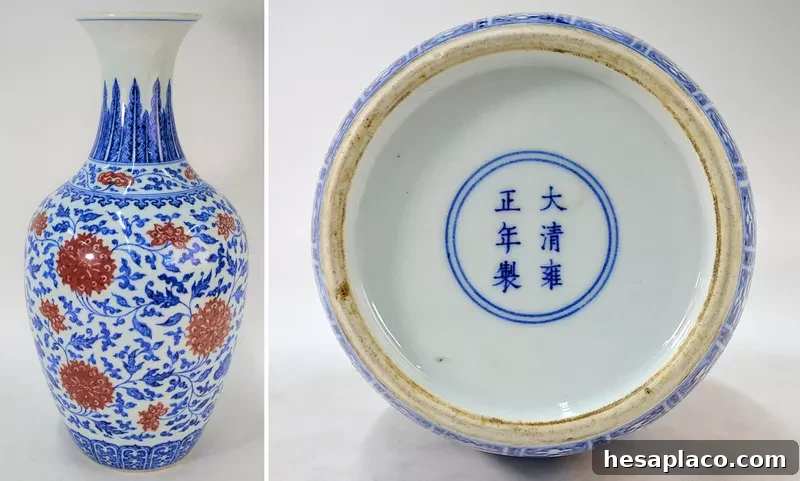
28. Chinese Yongzheng Blue and Red Lotus Vase
Chinese Antiques
Sale year: 2019
Sale price: $1.98 million
Price today: $2.2 million
This blue and red lotus vase was made in the imperial kilns for the Yongzheng Emperor during the 18th-century Qing Dynasty. Yongzheng’s short reign was an important period of artistic innovation in porcelain. The vase follows the style of 15th-century ceramics. Its former owner, a woman in England, had kept it for around 20 years before taking it to Smith & Son auctioneers in Hampshire. Although it was initially estimated at only £600, interest surged before the sale, and it eventually sold for £1.6 million.
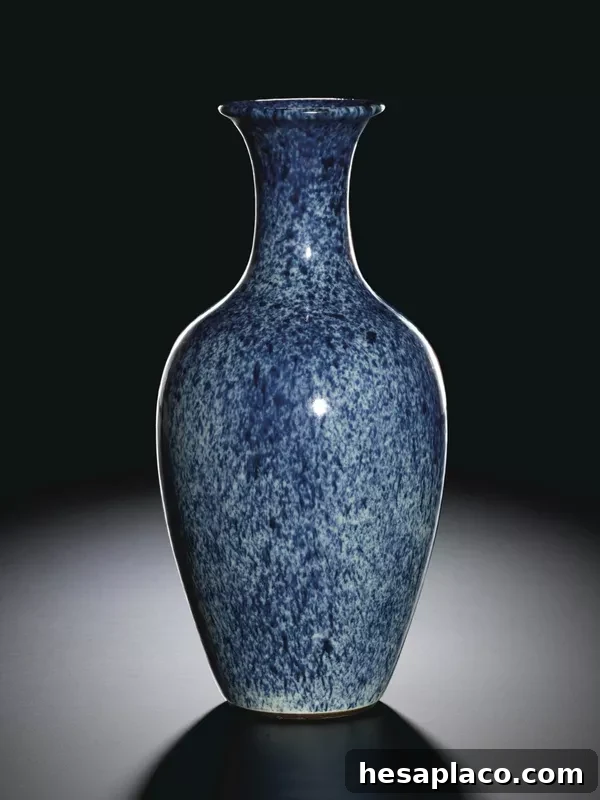
27. Chinese Snowflake Blue Yongzheng Vase
Sotheby’s
Sale year: 2013
Sale price: $2.73 million
Price today: $3.32 million
This rare Snowflake Blue vase was also made for the Yongzheng Emperor. Court potters were asked to recreate glazes from the Ming Dynasty, using antique ceramics in the imperial collection as models. The pale blue celadon surface is speckled with darker cobalt-blue tones, creating the impression of snow falling on a cold winter night. The slender oval form has an elegant neck and a flared mouth. Sotheby’s Hong Kong sold the vase in 1997 and again in 2013.
26. Chinese Famille-Rose Hundred Boys Vase
Christie’s / Alain.R.Truong
Sale year: 2014
Sale price: $3.79 million
Price today: $4.54 million
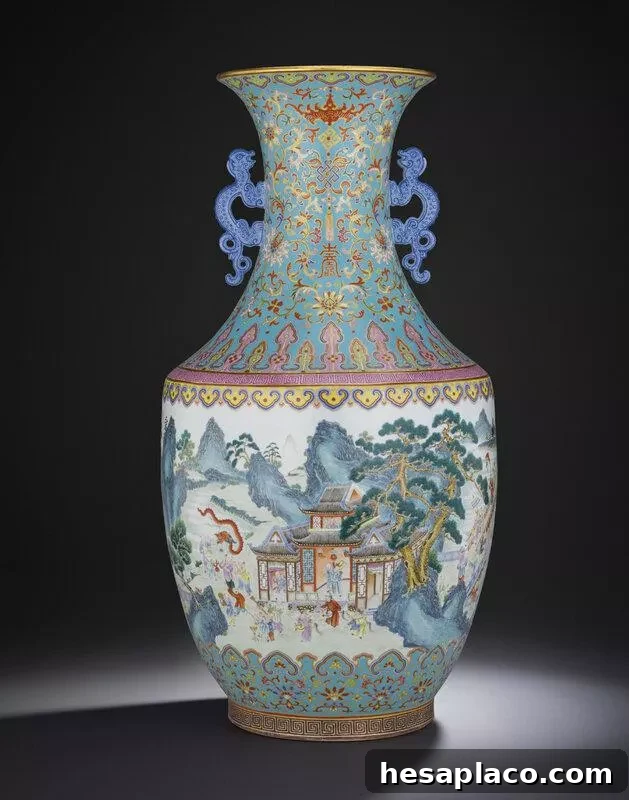
The Famille-Rose Hundred Boys Vase depicts boys celebrating the Spring Festival in palace gardens near a lake. They dance with a dragon, carry lanterns, play instruments, set off firecrackers and ride toy horses. Boys were a favored subject in Ming and Qing art because they symbolized hopes for sons and family continuity. The vase features soft Famille-Rose enamels in blue, yellow and pink. It was once owned by a private museum in Japan and later passed through auctions at Sotheby’s and Christie’s Hong Kong.
25. Chinese Famille-Rose Baluster Vase
Christie’s
Sale year: 2014
Sale price: $4.49 million
Price today: $5.38 million
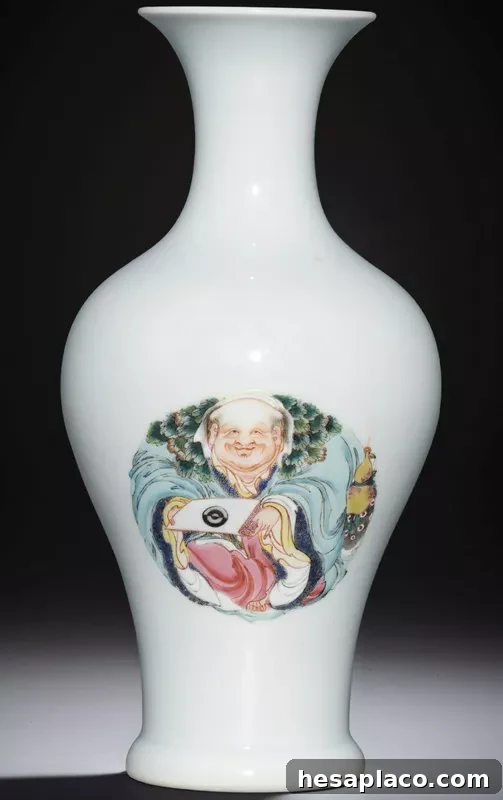
This rare white Famille-Rose vase dates to the Yongzheng period of the 18th-century Qing Dynasty. On the front is a circular enameled image of Fuxi, the mythical ancestor of humankind, traditionally associated with fishing, cooking, writing and the domestication of animals. He wears a leaf-collared robe and carries a double gourd, a symbol of fertility and long life. The vase moved through several private collections and was sold at Sotheby’s London, Sotheby’s Hong Kong and Christie’s Hong Kong.
24. Chinese Robin’s Egg and Gilt Archaistic Vase
Sotheby’s
Sale year: 2012
Sale price: $4.56 million
Price today: $5.63 million
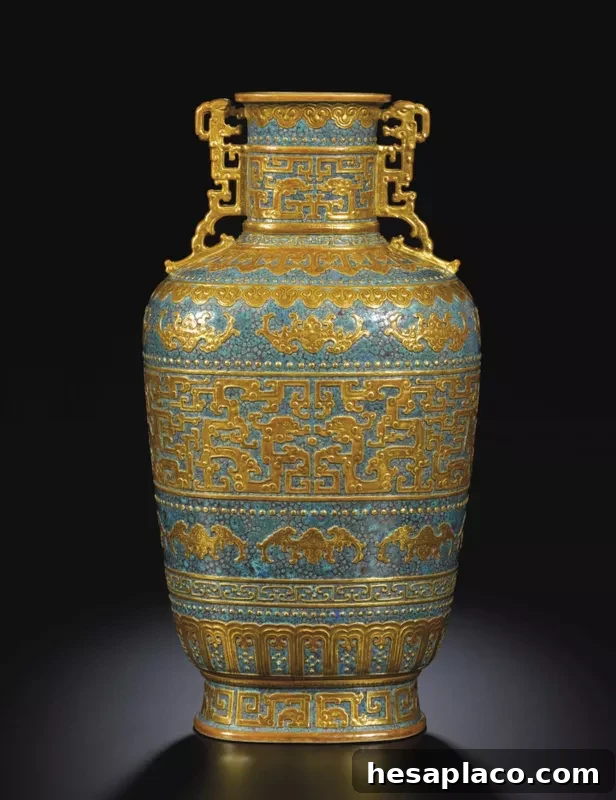
This unusual 18th-century vase was produced for the court of the Qianlong Emperor. It combines a robin’s egg blue glaze with gilt decoration and handles, along with stylized dragons and bats. The design imitates ancient bronzes from the Shang and Zhou periods, including the suggestion of a green aged patina. The vase was owned by a succession of English collectors from the early 19th century and was later sold by Christie’s London and Sotheby’s Hong Kong.
23. Chinese Green and Yellow Yongzheng Vase
Chinese Antiques
Sale year: 2013
Sale price: $4.8 million
Price today: $5.85 million
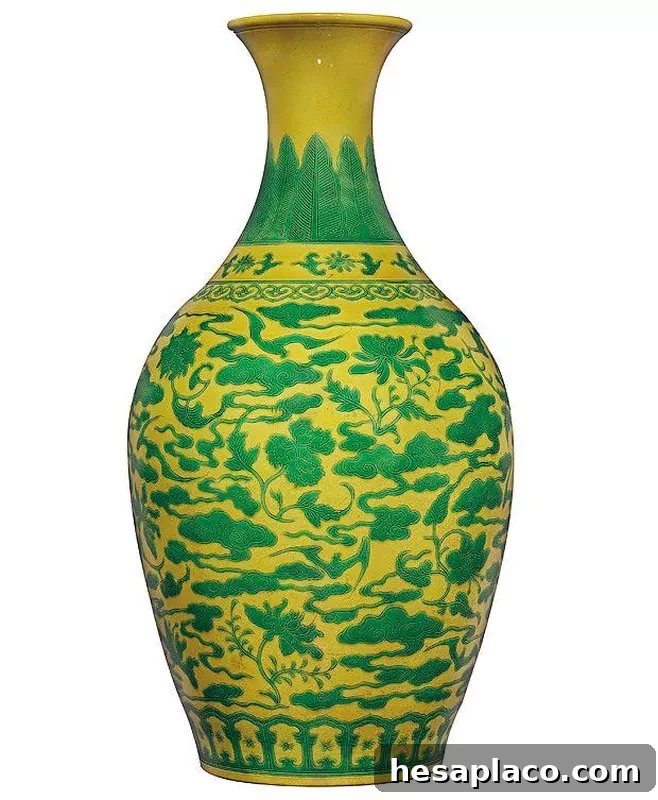
This rare green and yellow vase was made in the imperial kilns for the Yongzheng Emperor. Its painted decoration shows eight bats flying among clouds and stylized flowers. The owners inherited it from a family member who had purchased it in New York in 1961. A Christie’s expert noticed the vase while evaluating other works at a Chelsea property and identified it as imperial porcelain. It was later auctioned by Christie’s in London.
22. Pair of Chinese Archaistic Celadon and Gilt Vases
Sotheby’s
Sale year: 2010
Sale price: $4.74 million
Price today: $6.17 million
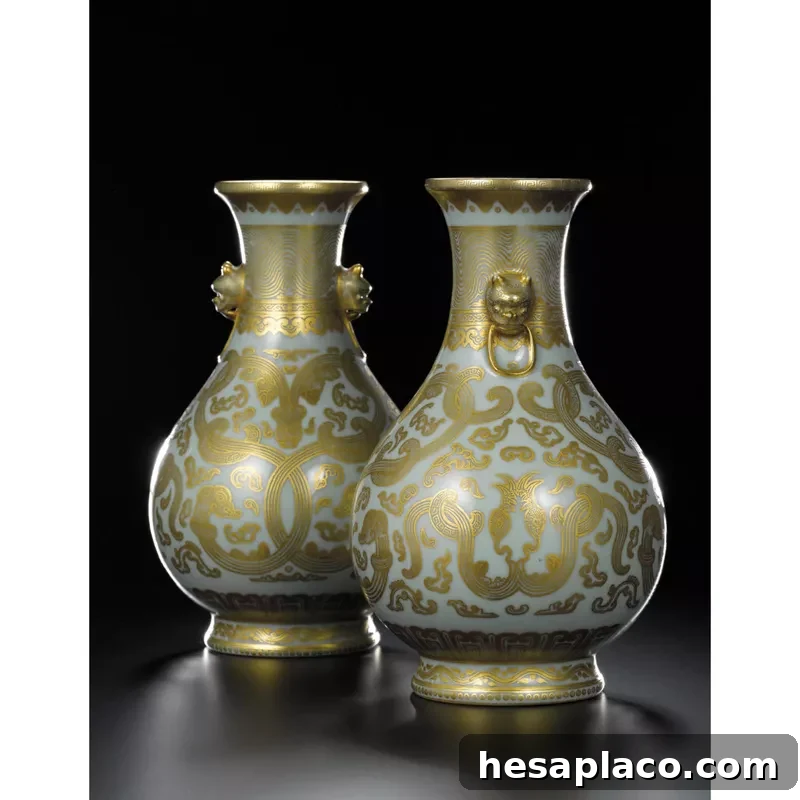
This pair of celadon and gilt vases was produced in the 18th century for the Qianlong court. Each vase has a celadon-glazed body with gilt overlay, imperial lion handles and stylized dragon and cloud motifs. The pair was formerly in the J.M. Hu private collection and appeared at major Hong Kong auctions, including Sotheby’s in 1993, Christie’s in 1996 and Sotheby’s again in 2010.
21. Chinese Blue and White Dragon and Phoenix Vase
Sotheby’s
Sale year: 2017
Sale price: $5.7 million
Price today: $6.6 million
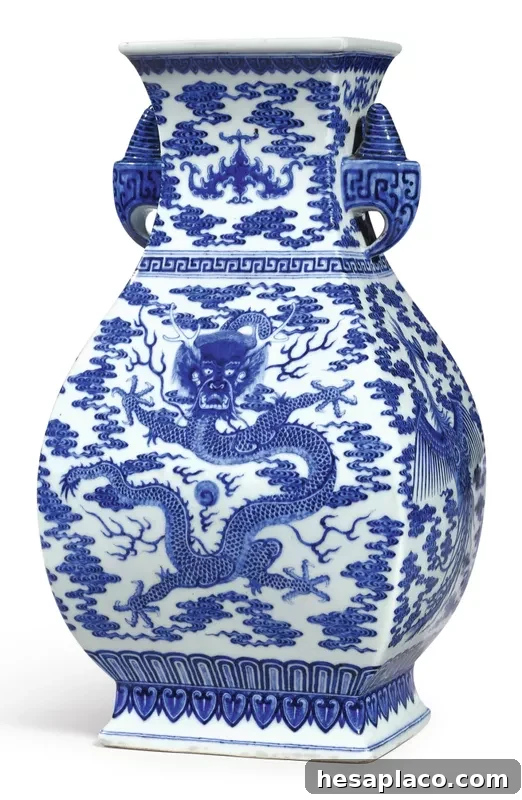
This rare blue and white vase dates from the reign of the Qianlong Emperor. Its wider sides show imperial dragons painted in cobalt blue, while the shorter sides feature phoenixes. The dragon was a powerful imperial symbol, and the phoenix was traditionally regarded as the king of birds. The vase belonged to the Matsuyama Collection before Sotheby’s Hong Kong sold it in 2017.
20. Chinese Blue and White Eight Immortals Vase
Sotheby’s
Sale year: 2016
Sale price: $5.7 million
Price today: $6.73 million
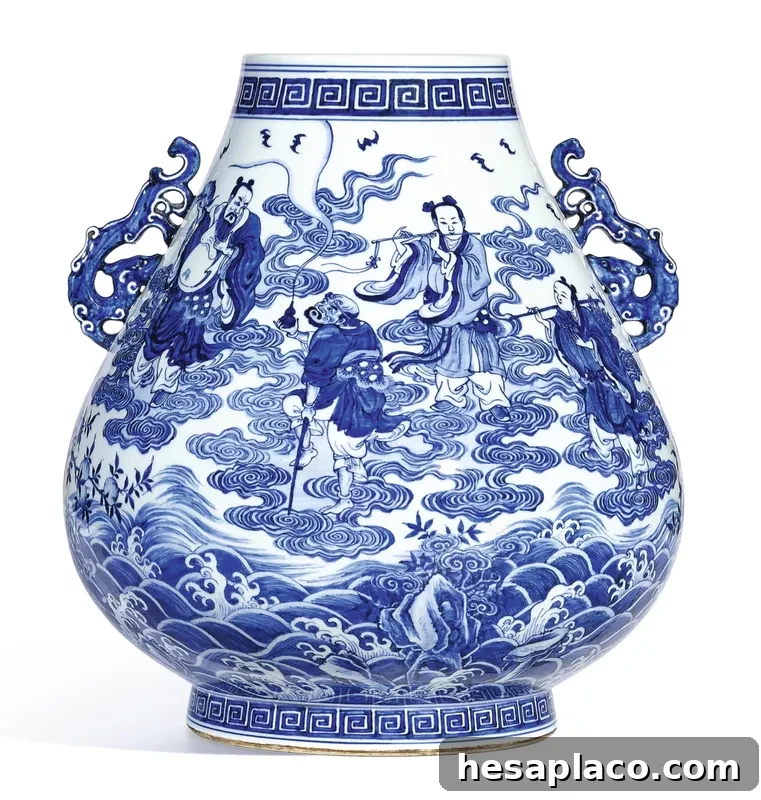
This white porcelain vase is painted in cobalt blue and has highly stylized dragon handles. Its decoration features the Eight Taoist Immortals standing on clouds. These legendary figures were popular in Chinese art, literature and folklore, but they were more often shown on bowls and dishes than on vases. Experts believe the imperial kilns made this piece in 1769 for the Dowager Empress’ birthday. Sotheby’s Hong Kong sold it in 1980 and again in 2016.
19. Chinese Turquoise Bajixiang Imitation Cloisonne Vase
Sotheby’s
Sale year: 2010
Sale price: $5.49 million
Price today: $7.14 million
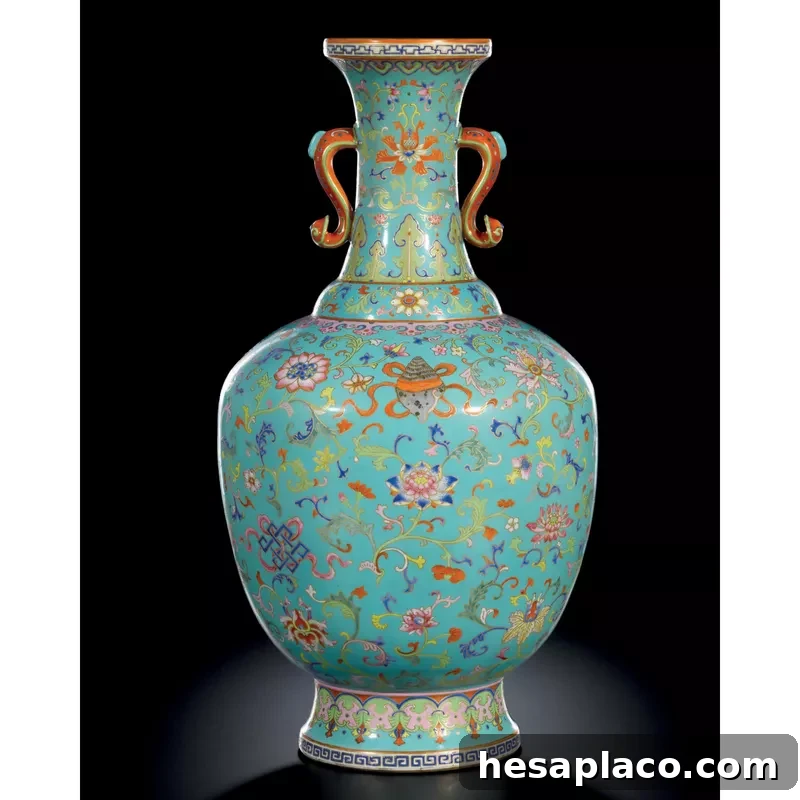
This turquoise vase is decorated with stylized flowers and the bajixiang, or Eight Auspicious Symbols of Buddhism. It also has red and gilt handles. The Qianlong Emperor admired cloisonne, and this porcelain imitates the appearance of that metal-and-enamel craft. From the early 19th century, the vase was owned by several English collectors. It was sold by Christie’s London in 1971 and later by Sotheby’s Hong Kong in 2010.
18. Chinese Ruby Ground Yangcai Vase
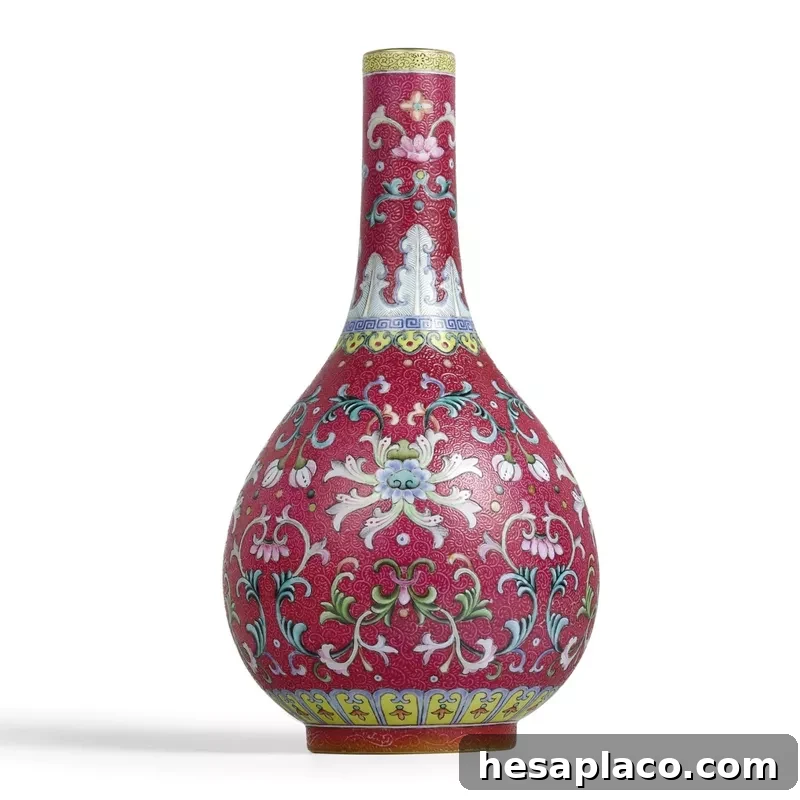
Sotheby’s
Sale year: 2018
Sale price: $6.44 million
Price today: $7.27 million
This ruby-ground Qing vase was made by the imperial kilns for the Qianlong court. Its exterior is decorated with four large lotus blossoms, surrounded by stylized flowers and leaves. Ruby-ground Yangcai ceramics are rarely available because most known examples are in museum collections. A matching vase is held by the Palace Museum in Beijing. Christie’s sold this piece in 1993, and Sotheby’s sold it again in 2018.
17. Chinese Copper-Red Dragon Lingzhi Double Gourd Vase
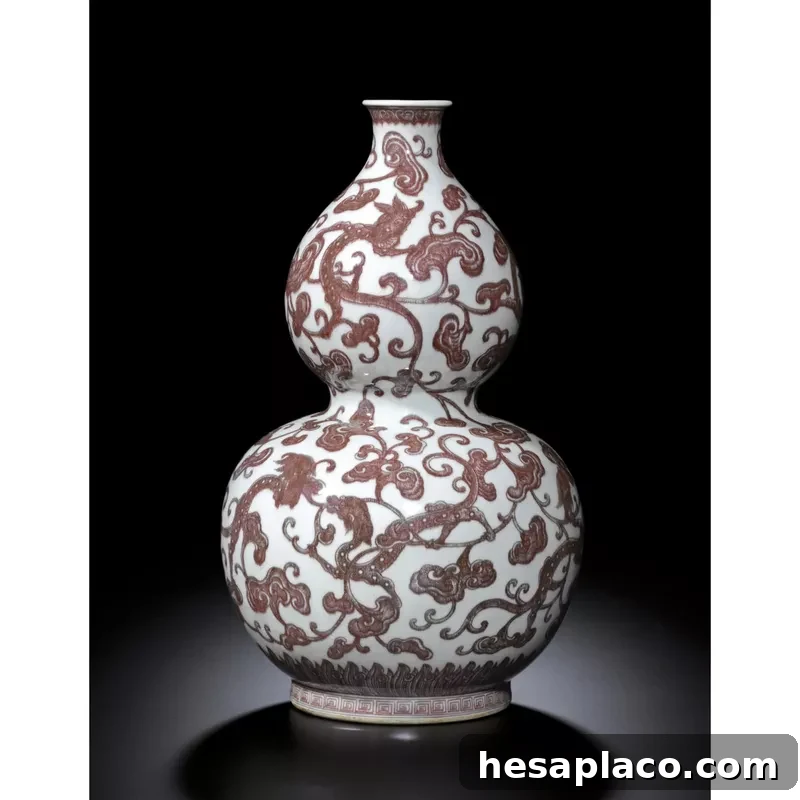
Sotheby’s
Sale year: 2010
Sale price: $5.79 million
Price today: $7.53 million
This copper-red double-gourd vase reflects the Qianlong-era interest in reviving historic glazes and forms. Copper-red porcelain was difficult to produce because the firing process was hard to control. The decoration shows nine stylized imperial dragons climbing among lingzhi fungus. The double-gourd shape symbolized fertility, while lingzhi represented longevity and abundance. Sotheby’s Hong Kong sold the vase in 2010.
16. Chinese Yellow Famille-Rose Anbaxian Sgraffiato Vase
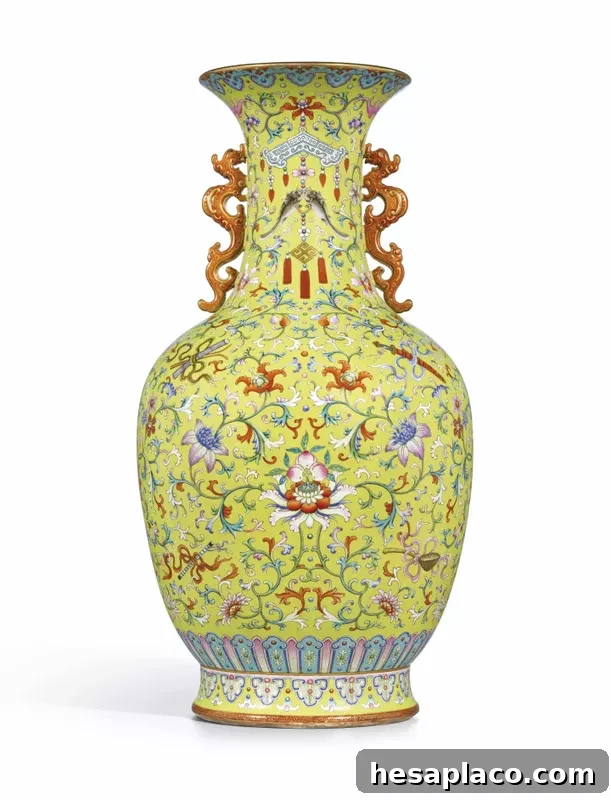
Sotheby’s
Sale year: 2015
Sale price: $6.6 million
Price today: $7.9 million
This large oval vase uses the soft Famille-Rose palette and features a complex “floral on brocade” design with painted fish chimes. It has a long neck, a flared mouth and orange-and-gold dragon-shaped handles. Experts believe it may have been created for a special court occasion, possibly a royal birthday. The Italian Orientalist painter Alberto Pasini acquired it during his travels in the 19th century. Sotheby’s Hong Kong sold it in 2015.
15. Chinese Yellow Ground Yangcai Vase
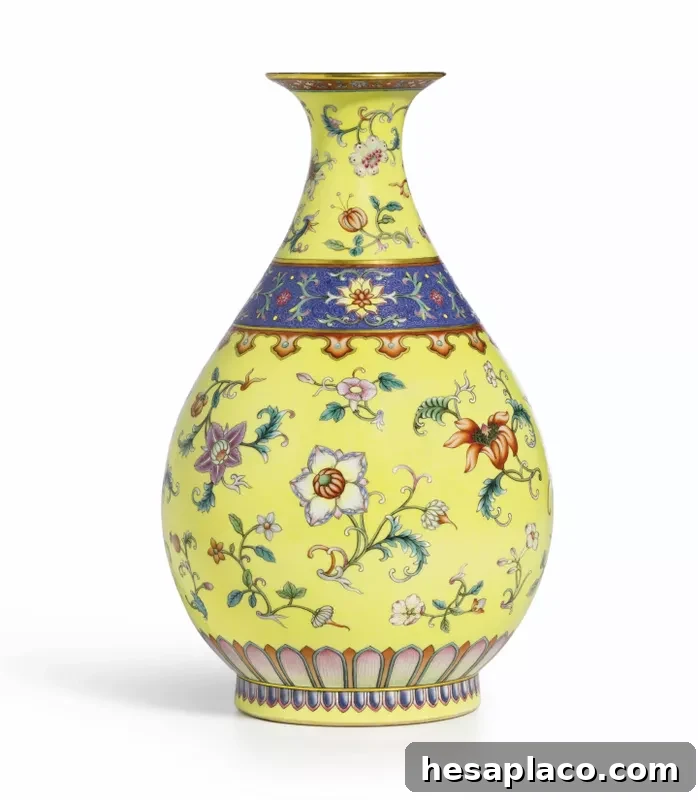
Sotheby’s
Sale year: 2014
Sale price: $7.3 million
Price today: $8.75 million
This pear-shaped Yangcai vase was made for the Qianlong Emperor’s court. It narrows toward the neck and ends in a flared mouth. The surface is painted with stylized flowers and enriched with enamel decoration around the neck, mouth and base. A woman bought the vase at a Florida yard sale in 2002, believing it to be a 20th-century copy. Experts later confirmed it was genuine, and it sold through Brunk’s Auctions before Sotheby’s Hong Kong sold it again in 2014.
14. Chinese Wanshou Blue and White Vase
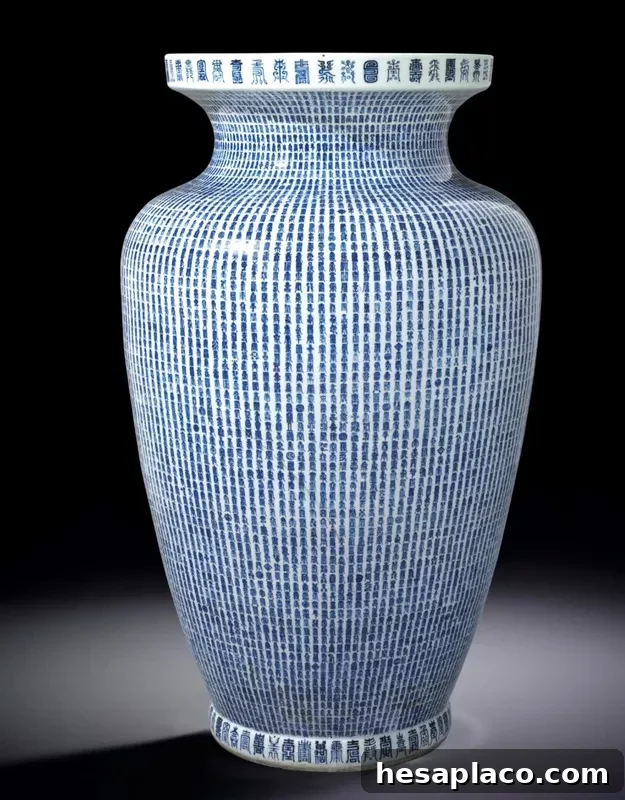
Christie’s
Sale year: 2013
Sale price: $8.3 million
Price today: $10.1 million
This large and extremely rare blue and white Wanshou vase dates to the Kangxi period. The porcelain is painted in cobalt blue with 999 characters meaning longevity and one character meaning 10,000, creating a powerful wish for endless life. Experts believe it may have been made as a birthday gift for the emperor or the Dowager Empress. An unknown American collector bought it in the 1950s, and Christie’s sold it at auction in 2013.
13. The Harry Garner Reticulated Vase
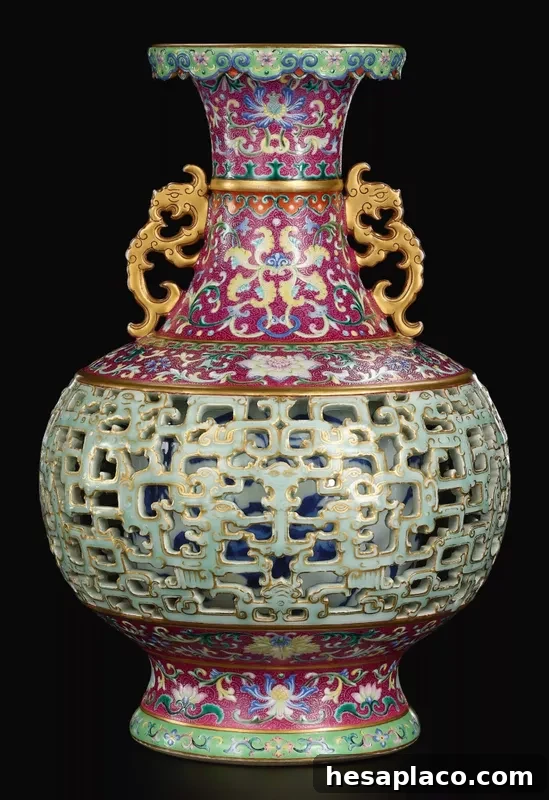
Sotheby’s
Sale year: 2020
Sale price: $9.75 million
Price today: $10.69 million
The Harry Garner Reticulated Vase was made by imperial potters for the Qianlong Emperor. Only a small number of these complex double-walled vases were produced because the technique was so demanding. The piece has a blue and white inner core, a celadon-green lattice outer wall, enamel decoration and gold accents. Sir Harry Garner, a noted collector of Chinese art, owned it in the 1950s. After decades in a private European home, it was identified as highly valuable and sold by Sotheby’s Hong Kong in 2020.
12. Chinese Robin’s Egg and Famille-Rose Revolving Vase
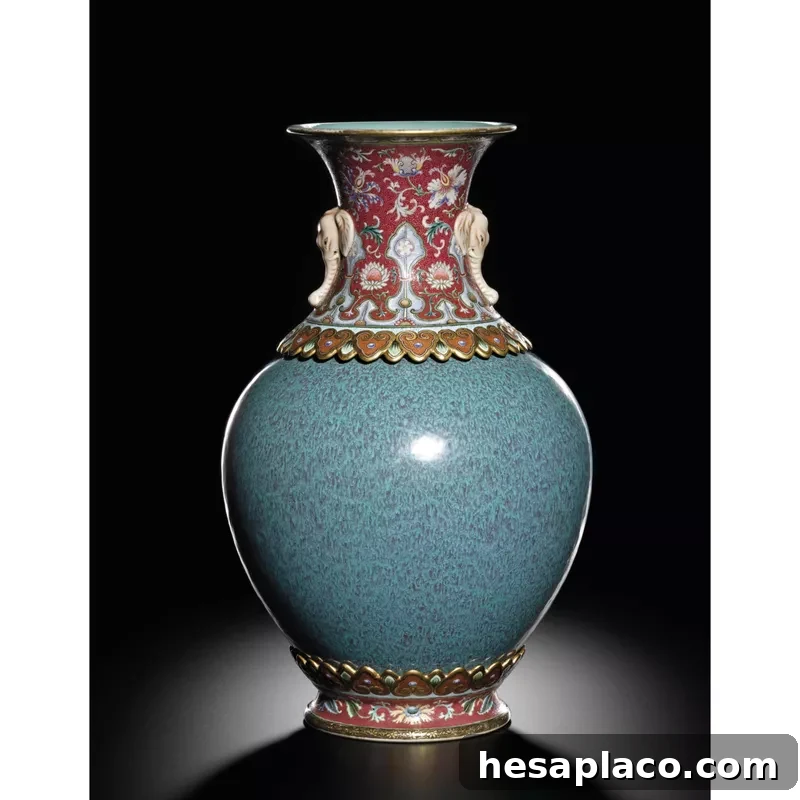
Sotheby’s
Sale year: 2011
Sale price: $8.95 million
Price today: $11.29 million
This rare revolving vase was made for the Qianlong Emperor, who enjoyed mechanical and decorative novelties. The body has a speckled robin’s egg blue glaze, while the neck and base are ruby-colored porcelain painted with stylized flowers and detailed with turquoise and gold enamels. Elephant-head handles decorate the neck. The vase was constructed in three sections so the body could turn on its base using an internal mechanism. Sotheby’s sold it in 2001.
11. Chinese Yongzheng Blue and White Garlic Mouth Vase
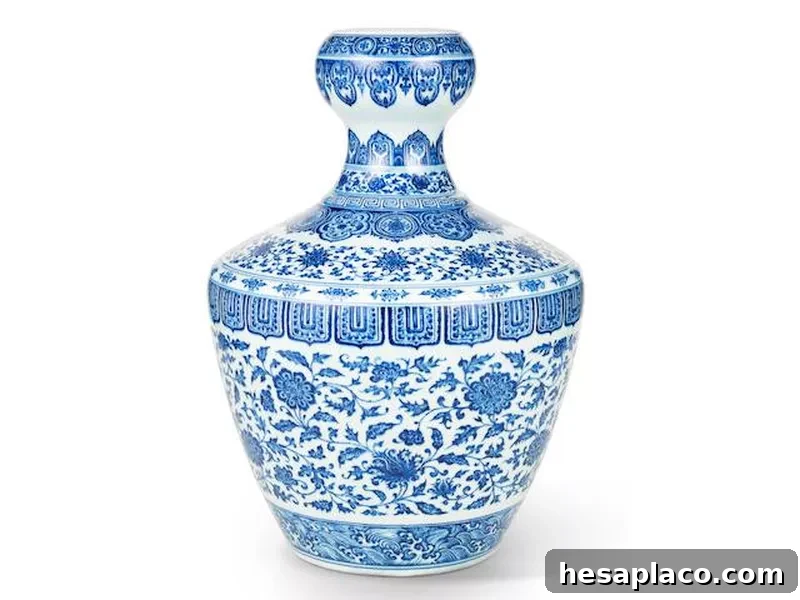
Bonhams
Sale year: 2014
Sale price: $9.8 million
Price today: $11.74 million
This blue and white Yongzheng vase has a white ground decorated with stylized floral and ornamental patterns. Its form includes a short neck and a bulbous garlic-shaped mouth. The only other known example of this type is in the Palace Museum in Beijing. Bonhams found the vase in the eastern United States and expected it to sell for around $765,000, but strong bidding drove the final price to 12 times the estimate.
10. Chinese Copper Red Ming Dynasty Vase
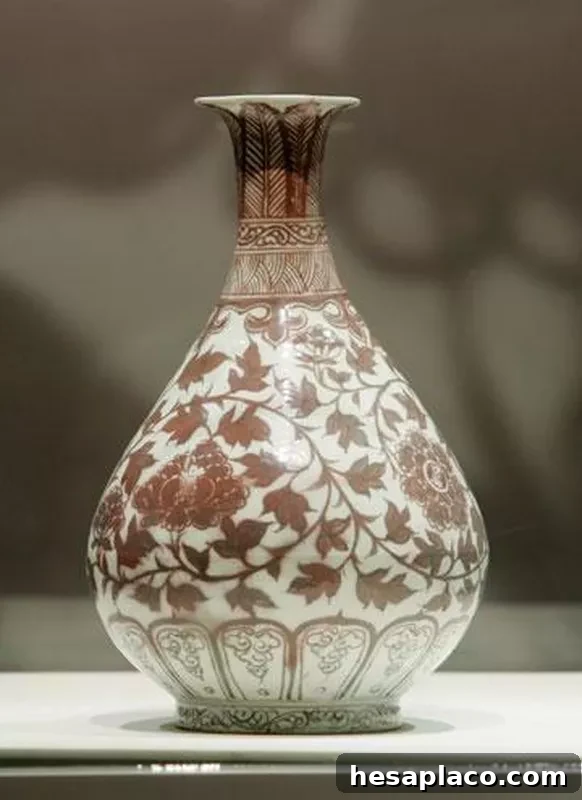
China Daily
Sale year: 2006
Sale price: $10.13 million
Price today: $14.26 million
This rare copper-red vase dates from the Ming Dynasty. Very few ceramics with this glaze survive in excellent condition because the technique was difficult to master and many pieces were damaged. This vase was considered the first perfect example of its type to appear at auction in 15 years. A Scottish couple who inherited it had been using it as a lamp before realizing its importance after seeing a similar piece in a museum. Christie’s Hong Kong sold it to Steve Wynn in 2006.
9. The Taber Family Tianqiuping Vase
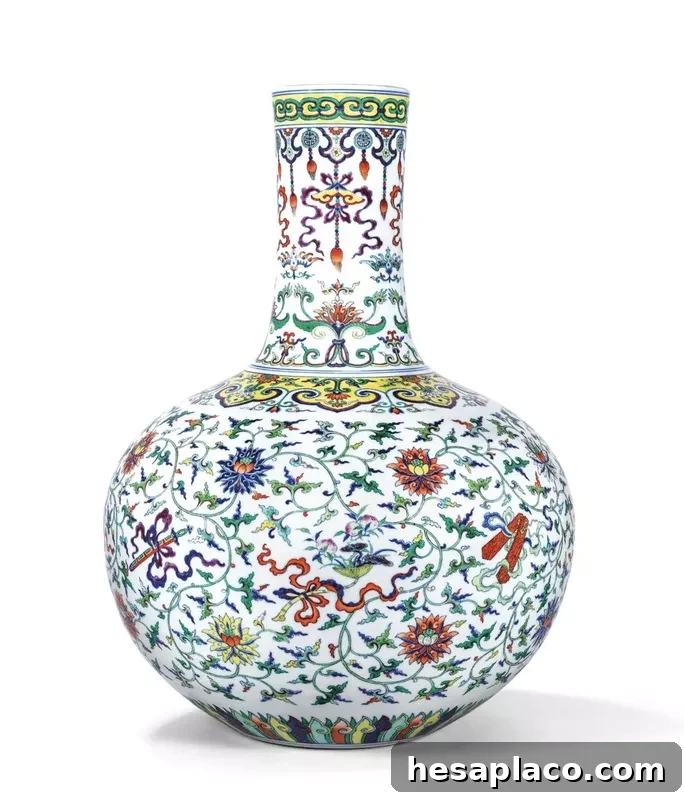
Christie’s
Sale year: 2018
Sale price: $16.7 million
Price today: $18.86 million
This colorful tianqiuping, or heavenly globe vase, was made during the reign of the Qianlong Emperor. The rounded globe body and long narrow neck required highly skilled craftsmanship and multiple kiln firings. Its decoration includes stylized flowers and symbols associated with the Eight Taoist Immortals. George Taber acquired the vase in the early 20th century, and it remained in the family before being bequeathed to the Philbrook Museum of Art. The museum sold it to support future acquisitions.
8. The Yongzheng Emperor’s Double Dragon Amphora
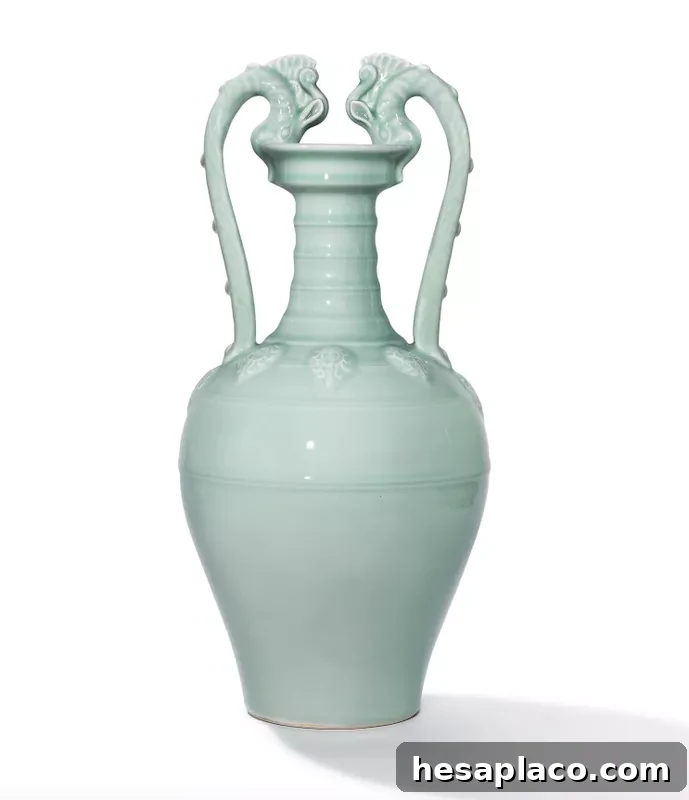
Christie’s
Sale year: 2017
Sale price: $18.13 million
Price today: $20.98 million
This amphora combines a slim body, narrow neck and double bamboo-patterned handles ending in dragon heads. Its form was inspired by Tang Dynasty styles, while the bluish-green celadon glaze echoes Song Dynasty Longquan ware. When Christie’s sold it in 2004, it set a world record for Qing monochrome porcelain. When it sold again in 2017, it achieved a new record for Chinese monochrome ceramics.
7. Chinese Yamanaka Reticulated Vase
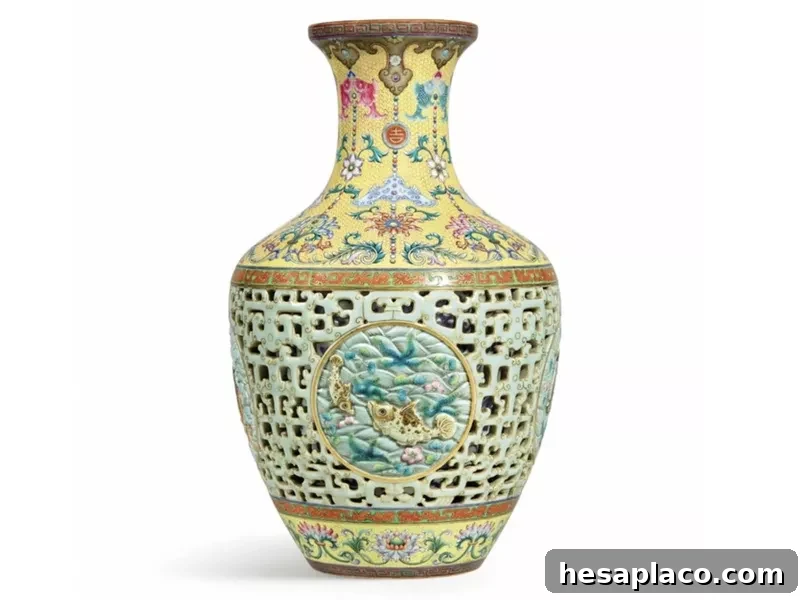
The Value
Sale year: 2018
Sale price: $18.98 million
Price today: $21.43 million
The Yamanaka Reticulated Vase is named after Yamanaka & Company, a Japanese firm that supplied Chinese works of art to Western markets in the early 20th century. A Japanese collector bought the piece in 1924, and it remained out of public sale for nearly a century. The vase has a double-wall structure, with an inner vessel surrounded by a celadon-green lattice body, plus a yellow enamel neck and base. Experts believe it may be paired with the Jiqingyouyu Reticulated Vase.
6. Chinese Yangcai Famille-Rose Porcelain Vase
Sotheby’s France / Twitter
Sale year: 2018
Sale price: $19 million
Price today: $21.46 million
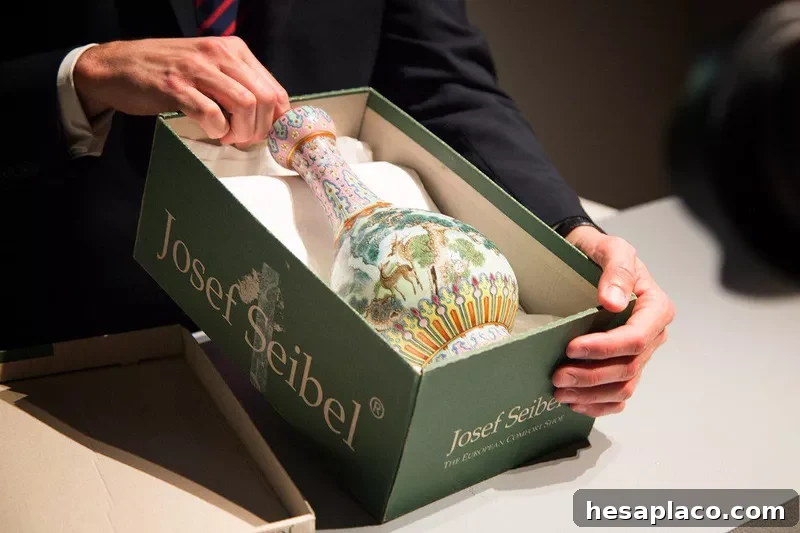
The French owners of this Qing Dynasty vase discovered it stored in a shoebox. Their grandparents had inherited it from an uncle but disliked the design and placed it in the attic, where it remained forgotten for years. In 2018, the family brought it to Sotheby’s in Paris for appraisal. Experts identified it as an 18th-century Qianlong-period Famille-Rose porcelain vase. Most comparable examples are held in museums, and this design, with a pink neck and base and a painted body, is known as a unique example. It became the most expensive Chinese porcelain sold in France.
5. Chinese Famille-Rose Butterfly Double-Gourd Vase Pair
Christie’s
Sale year: 2017
Sale price: $19.44 million
Price today: $22.5 million
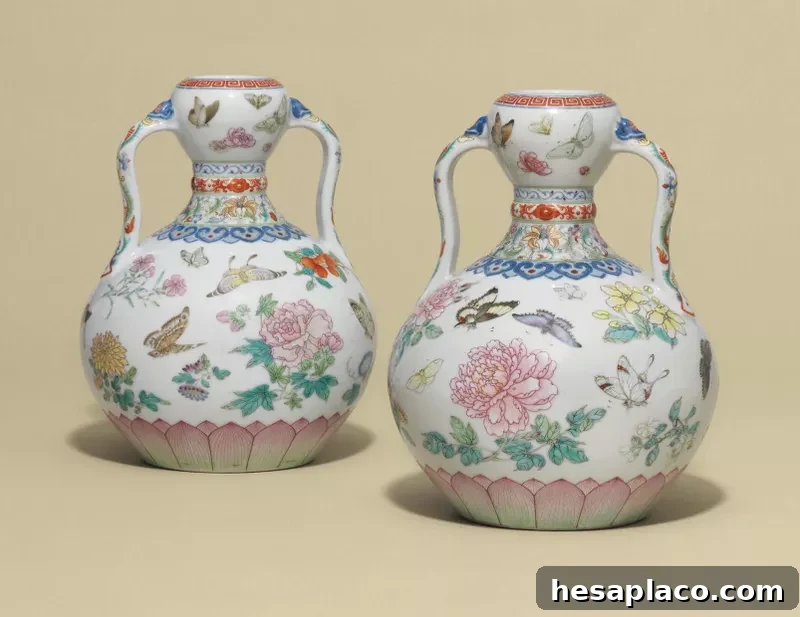
This pair of Famille-Rose double-gourd vases was made for the Qianlong court in the 18th century. Only a few related single examples have appeared on the open market. The vases are painted in soft pastel enamels with flowers and butterflies. Flowers such as peonies, roses and asters were associated with good fortune, longevity, prosperity, health and happiness, while butterflies symbolized joy and romantic love. An English noblewoman bought the pair in the 1930s, and they remained in the family until Christie’s auctioned them in 2017.
4. Chinese Ming Dynasty Meiping Vase
ABC
Sale year: 2011
Sale price: $22.6 million
Price today: $28.5 million
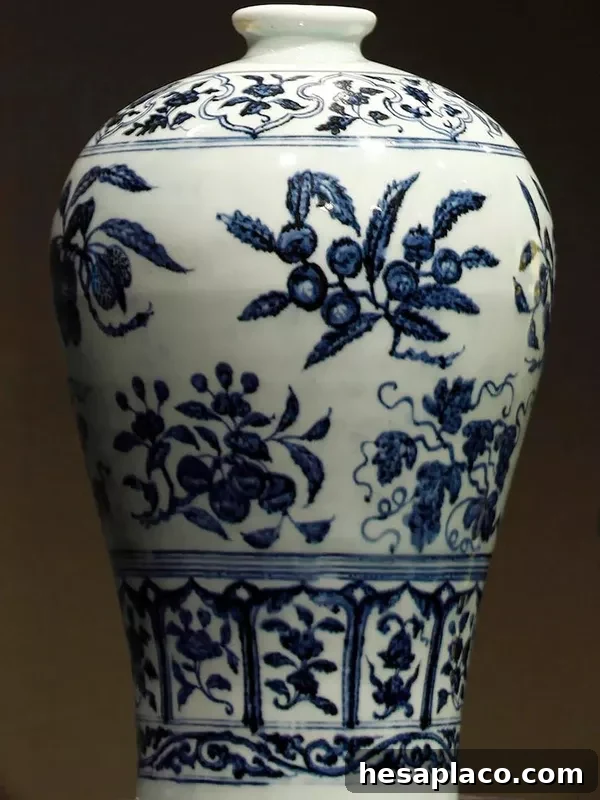
This 15th-century Ming Dynasty vase is made of white porcelain painted with blue glaze. It follows the Meiping form, which has a full shoulder, rounded body and short narrow neck. Such vases were traditionally designed to hold a single branch of plum blossoms. While many Ming-style ceramics are affordable, genuine imperial Ming porcelain can command extraordinary prices. When Sotheby’s Hong Kong sold this vase in 2011, it set a world record for Ming porcelain.
3. Chinese Painted Enamel and Bronze Qing Dynasty Vase
Chinese Antiques
Sale year: 2014
Sale price: $24.7 million
Price today: $29.6 million
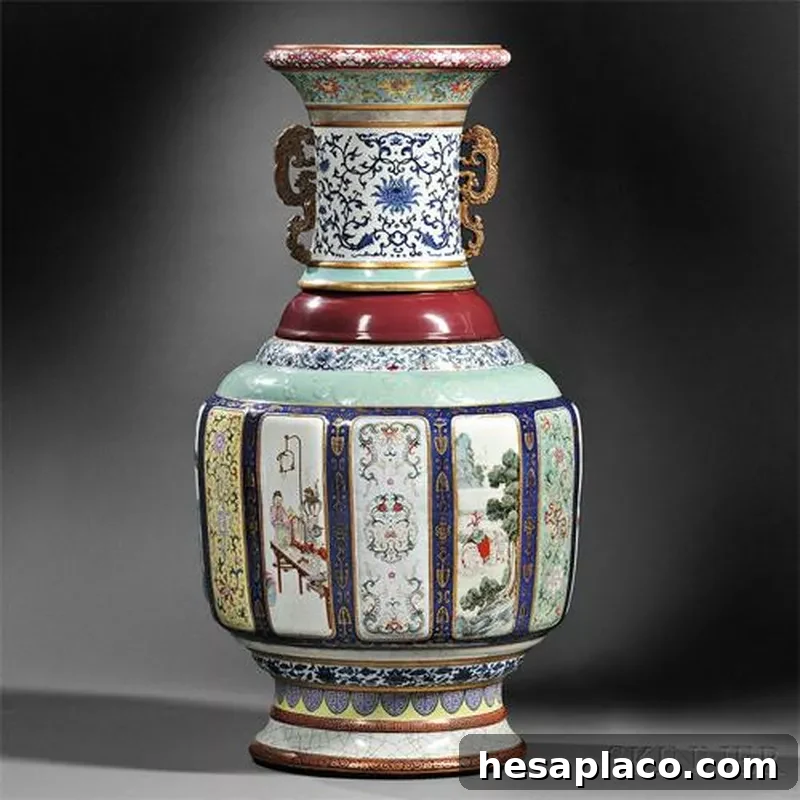
This 18th-century Qing Dynasty vase combines porcelain, painted enamel and bronze. Its elaborate design includes blue-and-white sections, celadon green areas and painted panels with floral patterns, natural scenes and daily-life imagery. Experts estimate the piece may have required 15 firings to achieve its complex colors and decoration. The only other known example in this style is in the National Palace Museum in Beijing. The owner bought it in New York in 1964 for $750. Despite cracks and scratches, its rarity led to a major sale at Skinner Boston in 2014.
2. Chinese Imperial Phoenix Revolving Vase
The Value
Sale year: 2021
Sale price: $41.6 million
Price today: $43.56 million
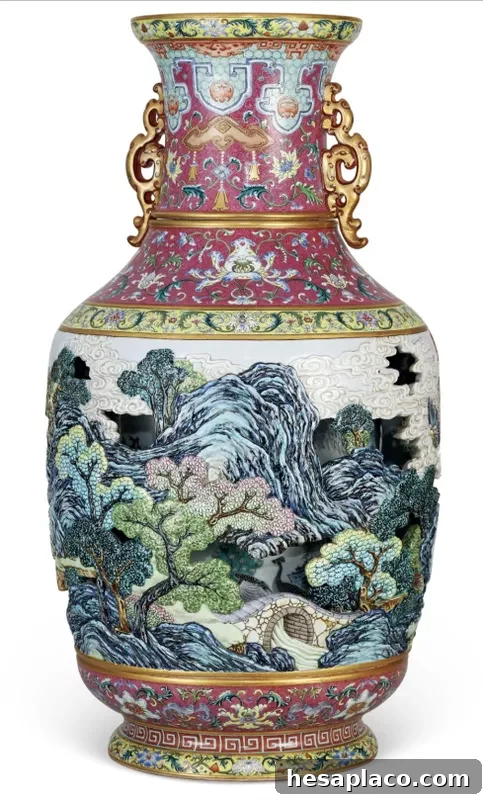
This Chinese Imperial Revolving Vase contains a mechanism that allows the vessel to rotate, revealing an elaborately painted phoenix set against a raised landscape scene with clouds, birds, a river and a bridge. The neck and base are richly decorated with enamel and gold accents. An English family first bought the vase in 1875 and passed it down for generations before selling it at auction in 1999. Dealer William Chak later acquired it and sold it to an Asian collector, who resold it at auction in Beijing in 2021.
1. Chinese Jiqingyouyu Reticulated Vase
The Value
Sale year: 2012
Sale price: $32.8 million
Price today: $44.53 million
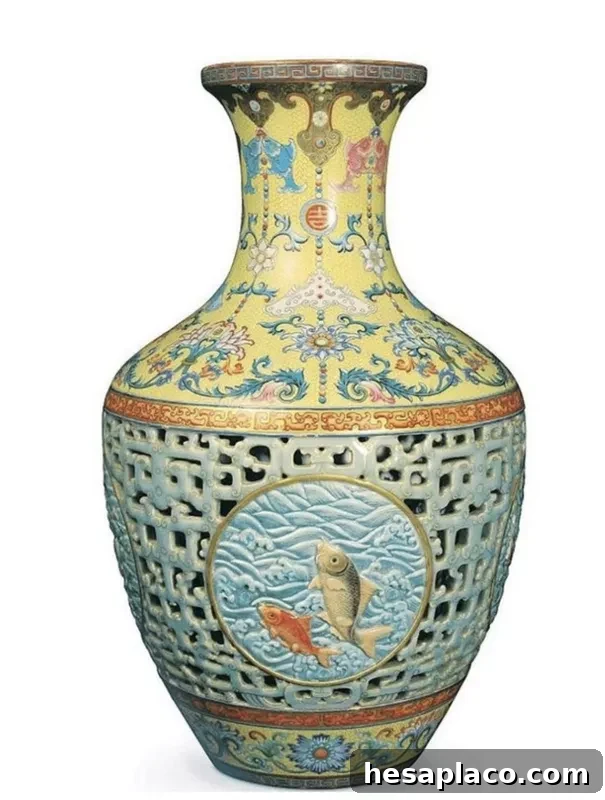
In 2010, Gene Johnson and her son Tony were clearing the London home of Gene’s late sister when they found a dusty, brightly colored vase on a shelf. Gene’s brother-in-law, Mr. Newman, had purchased it during a trip to the Far East in the 1930s. The vase has a double-wall structure, with an inner vessel and an outer celadon-green reticulated lattice body, along with a yellow enamel neck and base. Bainbridges Auction House dated the richly decorated ceramic to the mid-to-late 18th-century Qing Dynasty. A mainland Chinese buyer won it at auction for £43 million, then a world record for Asian art, but failed to pay. Bainbridges later resold the vase privately in 2012 for £25 million.